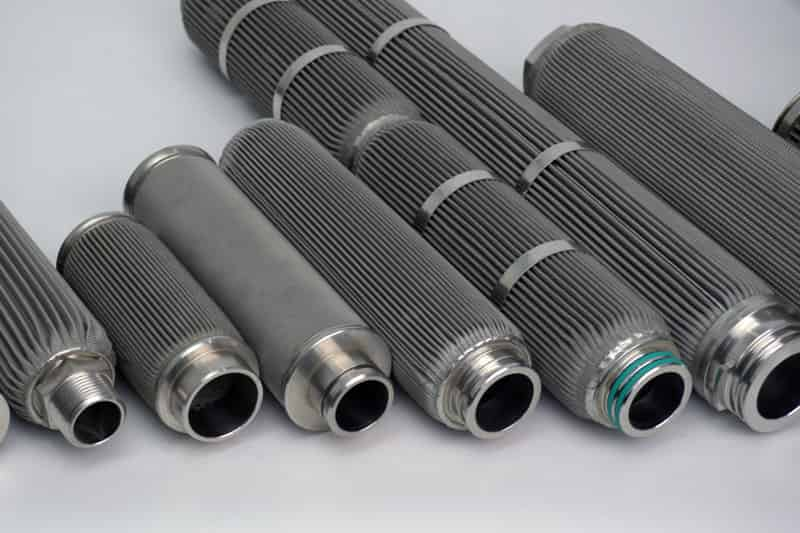
Centrifugal Pre-Separation: Utilizing Racor's patented Cyclonic swirl technology, centrifugal force separates 95% of free water in fuel into a collection cup while intercepting large particulate impurities ≥100 μm. Testing on a 450-horsepower trawler showed that the pre-separation stage reduces the load on subsequent filter elements by 40%.
Deep Fiber Filtration: The AquaBloc II oleophilic-hydrophobic composite fiber layer achieves a 98% interception efficiency for emulsified water (particle size <10 μm) while filtering solid particles ≥30 μm. Compared with traditional glass fiber filter elements, its dirt-holding capacity is increased by 60%, effectively extending the replacement cycle.
Precision Membrane Filtration: Integrated with a PTFE nano-membrane, it can remove colloidal contaminants ≥5 μm (such as microbial polymers), ensuring fuel cleanliness meets the ISO 4406 18/16/13 standard and satisfying the operational requirements of electronic fuel injection system injectors (tolerance ±2 μm).
Extreme Environment Adaptation Design
Corrosion-Resistant Material System: The filter element skeleton is made of 316L stainless steel, and the seals use perfluoroether rubber (FFKM), which exhibit no corrosion or swelling after 1,000 hours of continuous operation in salt spray tests (ASTM B117). A North Sea trawler using the 2020 filter element in high-sulfur fuel (0.5% sulfur content) reduced injector corrosion rates by 75%.
Temperature Compensation Mechanism: The filter element medium adopts a gradient pore design, controlling flow fluctuations within ±5% in the temperature range of -20°C to 80°C to avoid reduced filtration efficiency due to changes in fuel viscosity.
III. Practical Application Value
Economic Efficiency Improvement
Maintenance Cost Optimization: After a 500-ton trawler replaced its filter elements with the 2020 model, the engine maintenance cycle was extended from 500 hours to 800 hours, reducing annual filter replacement costs by 32%.
Fuel Consumption Improvement: Improved fuel cleanliness increased combustion efficiency by 3.5%. Based on a daily fuel consumption of 2 tons, annual fuel cost savings amount to approximately $28,000.
Enhanced Reliability
Reduced Fault-Induced Downtime: Data from an ocean fishing company showed that the failure rate of injector blockages in fishing vessels using the 2020 filter element decreased from 1.2 times per month to 0.3 times, avoiding fishing losses caused by downtime.
Extended Equipment Lifespan: The wear rate of piston pumps decreased by 50%, and the overhaul cycle of a Cummins QSM11 engine on a fishing vessel was extended from 8,000 hours to 12,000 hours.
IV. Industry Practices and Innovation Trends
Integration of Intelligent Monitoring Systems
Some fishing vessels have begun to install Parker's SmartSense™ intelligent filter element monitoring module, which uses built-in pressure differential sensors and moisture detectors to transmit real-time filter element status data to the cockpit display. When the contamination level approaches the threshold, the system automatically switches to a backup filter element and triggers an alarm to ensure navigation safety.
Green Technology Upgrades
Application of Degradable Filter Materials: Parker is developing bio-based filter element media with 40% lower carbon emissions than traditional materials, which has undergone pilot testing on a Norwegian eco-trawler with filtration performance comparable to existing products.
Waste Filter Element Recycling System: Through cooperation with more than 200 ports worldwide, a filter element recycling network has been established, achieving 95% recycling of metal and plastic materials.
V. Conclusions and Outlook
The cross-referenced Parker Racor 2020 filter element has become an ideal guardian of diesel power systems in commercial trawler fishing vessels, thanks to its precise filtration technology and excellent environmental adaptability. Its applications span major global fishing areas, from Arctic cod fishing vessels to tropical tuna purse seiners. With the deepening implementation of the IMO 2020 global sulfur restriction and the gradual promotion of electrified fishing vessels, cross-referenced Parker Racor is developing new filtration solutions for biodiesel and hydrogen fuel cells, continuing to lead the clean transformation of marine power systems. In the future, through the deep integration of IoT, nanomaterials, and other technologies, the 2020 filter element will further advance toward the goals of "zero-fault operation" and "full lifecycle management," providing a solid foundation for the sustainable development of marine fisheries.