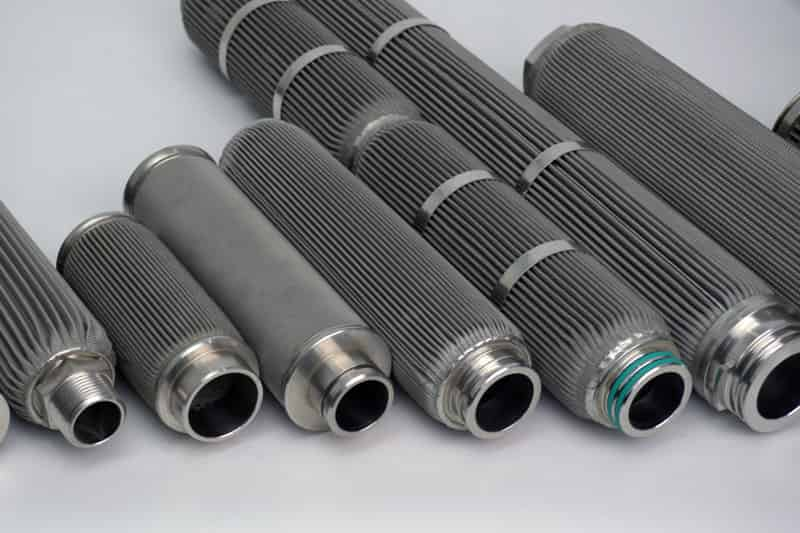
Amid the profound transformation of the global energy landscape, the refining and chemical industry is experiencing unprecedented challenges and opportunities. Among them, the escalating trend of crude oil inferiorization looms large, casting a significant impact on the production and operation of refining and chemical enterprises. Against this backdrop, the deep metal removal filtration technology for heavy fuel oil, as a crucial solution to address the inferiorization of crude oil, is witnessing an explosive growth in market demand.
The Evident Trend of Crude Oil Inferiorization
In recent years, the inferiorization of global crude oil resources has become increasingly prominent. Light, low-sulfur crude oil resources are gradually becoming scarce, while the proportion of heavy, high-sulfur, and high-metal-content crude oil is continuously rising. According to relevant data, the current production of sulfur-containing and high-sulfur crude oil has exceeded three-quarters of the total global crude oil production. In China, with the relative stability of domestic crude oil production and the deepening dependence on imported crude oil, the inferiorization degree of crude oil processed by refineries is also increasing day by day. There are mainly two reasons for the inferiorization of crude oil. On the one hand, the gradual depletion of high-quality global crude oil resources forces oil exploration companies to increase the exploitation of heavy and inferior crude oil. These crude oils often contain higher levels of impurities such as sulfur, nitrogen, and heavy metals, posing great difficulties for subsequent refining and processing. On the other hand, the supply-demand relationship and price fluctuations in the international crude oil market prompt refining and chemical enterprises to choose relatively inexpensive inferior crude oil as processing raw materials more frequently, in order to reduce production costs. The Multiple Challenges Posed by Inferior Crude Oil to Refining and Chemical Industry The extensive use of inferior crude oil has brought a series of severe challenges to the refining and chemical industry. Firstly, the corrosion of refining and chemical equipment has become more serious. Corrosive substances such as high sulfur and high acid will react chemically with the metal surface of the equipment during the crude oil processing, leading to the thinning of the equipment wall thickness, leakage, or even damage, which seriously affects the safe and stable operation of the equipment. Statistics show that the number of unplanned shutdowns of refining and chemical units due to corrosion problems has been increasing year by year, causing huge economic losses to enterprises. Secondly, heavy metal impurities in inferior crude oil, such as nickel, vanadium, iron, etc., will accumulate in large quantities on the surface of the catalyst, resulting in catalyst poisoning and deactivation. This reduces the reaction efficiency of key processes such as catalytic cracking and hydrocracking and increases the production cost of products. Taking the catalytic cracking unit as an example, when the nickel content in the feedstock oil exceeds a certain limit, the activity of the catalyst will drop significantly, the yields of gasoline and light oil will decrease remarkably, while the coke yield will increase substantially. In addition, the processing of inferior crude oil also generates a large amount of pollutants, such as sulfur dioxide, nitrogen oxides, particulate matter, etc., putting a heavy burden on the environment. With the increasing strictness of environmental protection regulations, refining and chemical enterprises are facing huge environmental compliance costs and social responsibility pressures. Deep Metal Removal Filtration Technology as the Key to Breaking the Dilemma In the process of addressing the challenges posed by the inferiorization of crude oil, the deep metal removal filtration technology for heavy fuel oil has gradually emerged as the focus of attention of many refining and chemical enterprises. By adopting advanced filtration materials and processes, this technology can efficiently remove heavy metal impurities from heavy fuel oil, effectively protecting the activity of the catalyst, reducing the risk of equipment corrosion, improving product quality, and reducing environmental pollution. Currently, the mainstream deep metal removal filtration technologies for heavy fuel oil on the market mainly include membrane filtration technology, adsorption filtration technology, and centrifugal separation technology. Membrane filtration technology uses special filter membranes to achieve precise filtration of metal impurities in heavy fuel oil through screening, adsorption, and other functions. Adsorption filtration technology relies on adsorbents with high specific surface areas and special adsorption properties to adsorb heavy metal ions in heavy fuel oil onto their surfaces for removal. Centrifugal separation technology uses the centrifugal force to separate solid particles and metal impurities in heavy fuel oil from the oil phase in the centrifugal force field. Different metal removal filtration technologies have their own advantages, disadvantages, and applicable scopes. Membrane filtration technology has the advantages of high filtration precision and simple operation, but it has problems such as membrane fouling and high costs. Adsorption filtration technology has good selectivity for heavy metal adsorption, but the regeneration and replacement costs of adsorbents are relatively high. Centrifugal separation technology has a large processing capacity and high efficiency, but it requires high-performance equipment and has relatively high energy consumption. Remarkable Achievements in Technology Application In practical applications, the deep metal removal filtration technology for heavy fuel oil has achieved remarkable results. Many refining and chemical enterprises have successfully resolved a series of problems caused by the inferiorization of crude oil by adopting this technology, achieving the dual goals of cost reduction, efficiency improvement, and green development. For example, Guangdong Petrochemical of China National Petroleum Corporation, as China's first refining and chemical base capable of fully processing heavy crude oil, has effectively enhanced its adaptability to various types of heavy oil by breaking through the technical bottlenecks of heavy oil processing and adopting advanced deep metal removal filtration technology for heavy fuel oil. This technology not only ensures the long-term stable operation of the equipment but also significantly improves product quality, achieving a transformation from "processing low-quality raw materials" to "producing high-quality products". Compared with traditional refining processes, after applying the deep metal removal filtration technology, the corrosion rate of Guangdong Petrochemical's equipment has decreased significantly, the service life of the catalyst has been extended by [X]%, the yields of gasoline and diesel have increased by [X]% and [X]% respectively, and the sulfur content and metal impurity content in products have been greatly reduced, meeting the increasingly stringent environmental protection standards. Another example is China National Petroleum & Chemical Corporation (Sinopec) Refining and Chemical Company. By optimizing the crude oil procurement strategy, expanding the range of target crude oil varieties with high heavy metal content and other inferior characteristics, and applying the deep metal removal filtration technology for heavy fuel oil, it has successfully processed multiple new crude oil varieties and achieved remarkable cost savings of 160 million yuan. During the process of switching to new crude oil varieties for processing, this technology ensures the stable operation of the equipment and the full compliance of product quality, creating considerable economic benefits for the enterprise. Sustained Growth in Technology Demand With the further intensification of the crude oil inferiorization trend and the increasing strictness of environmental protection regulations, the market demand for the deep metal removal filtration technology for heavy fuel oil is showing an explosive growth trend. It is expected that in the next few years, the investment in this technology by the global refining and chemical industry will continue to increase, and the market scale is expected to expand rapidly. From the perspective of the domestic market, as one of the largest oil refining countries in the world, China has a huge refining capacity. With the increasing attention paid by domestic refineries to the problem of crude oil inferiorization and the increasingly strict requirements for product quality and environmental protection, the application prospect of the deep metal removal filtration technology for heavy fuel oil in the domestic market is extremely broad. Many refining and chemical enterprises are increasing their R&D investment and introduction efforts in this technology to enhance their core competitiveness. From the perspective of the international market, the refining and chemical industries in developed countries such as Europe and the United States started earlier in dealing with the inferiorization of crude oil, and the application of the deep metal removal filtration technology for heavy fuel oil is relatively mature. However, with the accelerated global energy transformation, the refining and chemical enterprises in these countries also face new challenges such as reducing carbon emissions and improving product quality, and the demand for more advanced and efficient metal removal filtration technologies remains strong. At the same time, the refining and chemical industries in emerging economies are in a stage of rapid development, with their crude oil processing capacity continuously increasing, and the market demand for the deep metal removal filtration technology for heavy fuel oil is also showing a rapid growth trend. The Direction of Technological Innovation and Development In order to better meet market demand, the deep metal removal filtration technology for heavy fuel oil is also constantly innovating and developing. In the future, this technology will continue to evolve towards the directions of high efficiency, energy conservation, environmental protection, and intelligence. In terms of high efficiency, researchers will be committed to developing filtration materials and equipment with higher filtration precision and larger processing capacity to further improve the metal removal efficiency and reduce energy consumption. For example, by using nanotechnology to prepare new filter membrane materials, it is expected to achieve efficient removal of nanoscale metal impurities in heavy fuel oil; developing new adsorbents to improve their adsorption capacity and selectivity for heavy metals, thereby enhancing the overall performance of adsorption filtration technology. In terms of energy conservation, optimizing the filtration process and equipment structure to reduce equipment operating energy consumption will become an important research direction. For example, by improving the design of centrifugal separation equipment to enhance the utilization efficiency of the centrifugal force field and reduce the power consumption of the equipment; developing new energy-saving membrane filtration technologies to reduce the energy consumption during membrane cleaning and regeneration. In terms of environmental protection, developing green and environmentally friendly metal removal filtration technologies and materials will become an inevitable trend. For example, using biodegradable materials to prepare filter membranes to reduce the environmental pollution caused by traditional filter materials; developing adsorbent regeneration technologies without secondary pollution to reduce pollutant emissions during the adsorbent regeneration process. In terms of intelligence, with the help of advanced technologies such as big data and artificial intelligence, achieving intelligent operation and remote monitoring of filtration equipment will effectively improve the operational stability and management efficiency of the equipment. For example, by establishing equipment operation data models and using artificial intelligence algorithms to monitor the equipment operation status in real-time, predict equipment failures, and carry out maintenance and repair in advance, thereby reducing the equipment failure rate and improving production efficiency. Conclusion The intensification of the crude oil inferiorization trend has brought many challenges to the refining and chemical industry, but it has also provided broad market space for the development of the deep metal removal filtration technology for heavy fuel oil. Against the backdrop of the current global energy transformation and increasingly strict environmental protection requirements, the importance of this technology as a key means to address the inferiorization of crude oil is self-evident. With the continuous innovation and development of the technology, the deep metal removal filtration technology for heavy fuel oil will play an increasingly important role in the refining and chemical industry, helping enterprises achieve the goals of cost reduction, efficiency improvement, and green development, and making positive contributions to the sustainable development of the global energy industry.