Phosphate ester hydraulic oil is widely used in aerospace, power systems, and industrial hydraulic equipment due to its excellent flame resistance, oxidation resistance, and lubricating properties. However, its high viscosity, strong corrosiveness, and sensitivity to moisture and impurities necessitate the design of an efficient filtration system. This paper explores the design of a filtration system for phosphate ester hydraulic oil in 2025, based on the characteristics of vacuum oil purifiers, aiming to improve oil quality, extend equipment lifespan, and meet modern industrial demands.
1. Design Background and Requirements Analysis Phosphate ester hydraulic oil is prone to contamination by moisture, gases, and particulate matter in high-temperature and high-pressure environments, leading to performance degradation and potential system failures. Traditional filtration methods struggle to effectively remove trace moisture, dissolved gases, and solid particles simultaneously. Vacuum oil purifiers, with their unique capabilities in vacuum degassing, dehydration, and multi-stage filtration, offer an ideal solution. In 2025, with the trends toward intelligence and sustainability, filtration systems must be efficient, cost-effective, safe, and user-friendly.
2. Characteristics and Applicability of Vacuum Oil Purifiers A vacuum oil purifier is an integrated device combining heating, vacuum degassing, multi-stage filtration, and regeneration functions. Its key features include:
Efficient Dehydration and Degassing: Through vacuum atomization, it removes 100% of free water and gases, and over 80% of dissolved water and gases. Multi-Stage Filtration: Equipped with coarse, medium, and fine filters, it achieves a filtration precision of 3 microns or better, with a particle removal rate of 99.9%. Compact and User-Friendly: Small size, lightweight, and portable or suitable for online use, with an intelligent control system ensuring safe and reliable operation. Regeneration Capability: Adsorption devices remove chemical residues from the oil, restoring its performance. Low Energy Consumption and Cost-Effectiveness: Compared to traditional equipment, it offers lower operating costs, ideal for long-term use. Given the high viscosity and corrosiveness of phosphate ester hydraulic oil, the vacuum oil purifier’s advantages are particularly pronounced. Its ability to handle moisture and gas contamination effectively aligns with the oil’s specific requirements.
3. Design Proposal for the Phosphate Ester Hydraulic Oil Filtration System Based on the characteristics of vacuum oil purifiers, the design of a filtration system for phosphate ester hydraulic oil involves the following aspects:
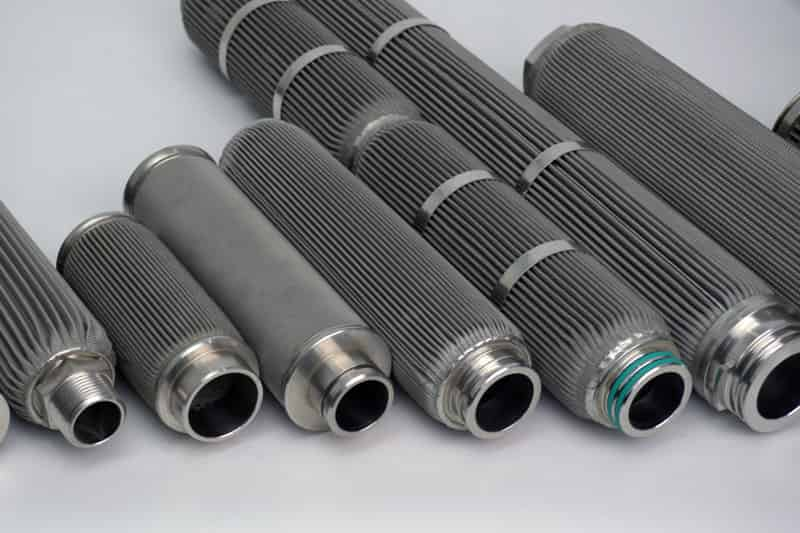
3.1 System Components Heating System: An electric heating unit maintains oil temperature between 40-60°C to avoid damaging the oil’s chemical structure while reducing viscosity for easier filtration. Vacuum Atomization System: Comprising a vacuum pump and Roots pump, it creates a high-vacuum environment (pressure ≤5 Pa). Oil is atomized via nozzles to increase the surface area for moisture and gas evaporation. Multi-Stage Filtration System: A three-tier filtration setup—coarse (50 microns, removes large particles), medium (10 microns, removes mid-sized particles), and fine (3 microns, removes tiny particles)—uses corrosion-resistant materials like polytetrafluoroethylene (PTFE) or stainless steel for filter elements. Adsorption Regeneration Unit: Incorporates activated alumina or molecular sieves to remove acidic substances and chemical residues, enhancing oil cleanliness. Oil Supply and Control System: Features a corrosion-resistant gear pump and a PLC intelligent control module for real-time monitoring and automatic adjustment of flow, temperature, pressure, and liquid level. 3.2 Design Parameters Processing Flow Rate: Adjustable between 100-4000 L/h to meet the online filtration needs of small to medium hydraulic systems. Vacuum Level: Operating vacuum controlled at -0.08 to -0.095 MPa to ensure dehydration and degassing efficiency. Filtration Precision: Particle filtration down to 3 microns, moisture content reduced to below 50 ppm, and gas content to below 0.1%. Corrosion Resistance: All oil-contact components made of 316L stainless steel or coated with special materials to withstand phosphate ester oil’s corrosiveness. 3.3 Intelligent and Sustainable Design Remote Monitoring: Integrated IoT technology uploads real-time operational data to the cloud via sensors, enabling remote monitoring and predictive maintenance. Energy Optimization: Variable-frequency motors adjust the power of vacuum and oil pumps, reducing energy consumption by approximately 20%, aligning with 2025’s green industrial trends. Waste Management: Replaceable filter cartridges and adsorbent modules facilitate recycling and regeneration, minimizing environmental impact. 4. System Operation Process Phosphate ester hydraulic oil enters the heating system via the oil supply pump and is preheated to the set temperature. The preheated oil flows into the vacuum atomization chamber, where it is atomized under high vacuum, rapidly removing moisture and gases. Degassed oil passes through coarse, medium, and fine filters to remove solid particles. Filtered oil enters the adsorption regeneration unit to eliminate acidic substances and chemical residues. Purified oil is pumped back into the hydraulic system, completing the cycle. 5. Design Advantages and Future Prospects This filtration system leverages the strengths of vacuum oil purifiers to efficiently remove moisture, gases, and particulate contaminants from phosphate ester hydraulic oil while restoring its performance through adsorption regeneration. Compared to traditional systems, its advantages include:
Efficiency: Achieves oil cleanliness standards (NAS 6 or ISO 4406 16/14/11) in a single pass. Safety: The intelligent control system ensures stable operating parameters, reducing human error. Cost-Effectiveness: Extends oil lifespan, reduces replacement frequency, and lowers maintenance costs. Looking ahead to 2025, with the advancement of Industry 4.0, this system could integrate AI algorithms to optimize filtration parameters via big data analysis, enabling adaptive operation. Additionally, developing new nano-filter materials could further enhance filtration precision and corrosion resistance tailored to phosphate ester hydraulic oil’s needs.
6. Conclusion The design of a phosphate ester hydraulic oil filtration system based on vacuum oil purifier characteristics combines high-efficiency purification, intelligent control, and environmental sustainability, making it well-suited for modern industrial applications. Through continuous optimization of design parameters and material selection, this system is poised to become a benchmark in phosphate ester hydraulic oil treatment by 2025, supporting equipment reliability and sustainable industrial development.