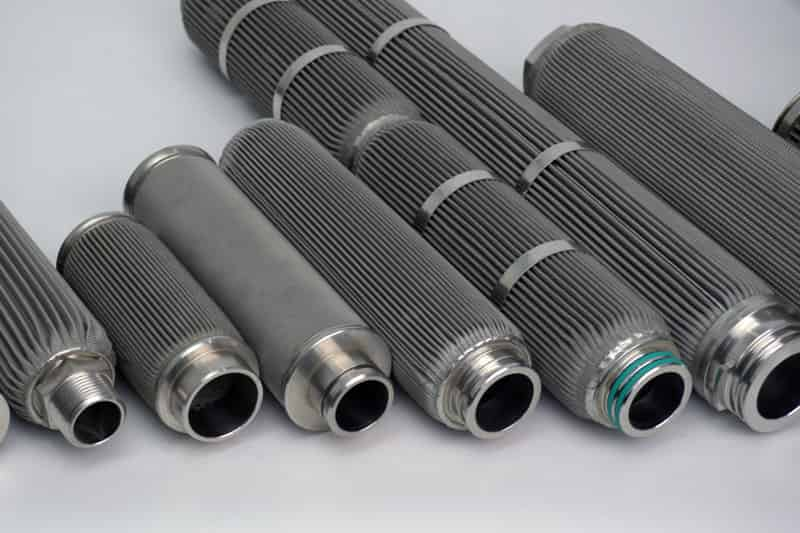
Introduction Heavy fuel oil (HFO) is a residual product from crude oil refining, widely used in shipping and industrial power generation due to its high energy density and low cost. However, it contains impurities such as asphaltenes, metals, and other solid particles, which can lead to engine wear and environmental pollution. Traditional purification methods like centrifugal separation and conventional filtration are limited in removing fine particles, creating a demand for advanced filtration technologies. Nanomaterial filters, with their unique properties such as high surface area and small pore size, are seen as a potential solution for heavy fuel oil purification. This report reviews the latest applications of carbon nanotubes, nanofibers, and other nanomaterials, exploring their potential, challenges, and future directions in heavy fuel oil purification.
Literature Review
Carbon Nanotube Filters Carbon nanotubes (CNTs) have garnered significant attention in the filtration field due to their excellent mechanical and electrical properties. In 2004, Srivastav et al. reported a free-standing monolithic structure composed of radially aligned CNT walls, used to remove heavy hydrocarbons from oil in a single step (Carbon nanotube filters). The study highlighted the thermal stability and mechanical strength of CNTs, making them suitable for harsh industrial environments like heavy fuel oil systems. Although the study was published in 2004, recent research has focused on CNT applications in water purification and gas separation, such as Kim et al. (2013), who explored CNTs' potential in desalination (Selective gas transport through few-layered graphene and graphene oxide membranes). However, there has been limited research directly addressing their application in heavy fuel oil purification, and further exploration of their applicability is needed.
Nanofiber Filters Nanofiber filters, created via electrospinning, have nanometer-scale fiber diameters, offering high surface area and small pore size, making them ideal for capturing fine particles. Jian Yong Feng (2014) studied the oil filtration properties of electrospun nanofiber composite materials, showing filtration efficiency of up to 99.9% for 4-micron particles in diesel fuel, with stable efficiency during the steady stage (Preparation and Oil Filtration Properties of Electrospun Nanofiber Composite Material). Commercially, nanofiber filters have been used in heavy vehicle fuel systems, such as the WIX NP fuel filters, which claim filtration efficiency of 98.7% for 4-micron particles and offer 2.5 times the contaminant retention capacity of traditional filters (WIX NP Fuel Filters). These filters could extend to heavy fuel oil purification, particularly in ship engines, but their performance in high-viscosity and high-temperature conditions requires further validation.
Other Nanomaterials In addition to CNTs and nanofibers, other nanomaterials like graphene, metal-organic frameworks (MOFs), and nanomembranes have shown potential in water purification. For example, Perreault et al. (2015) reviewed the use of graphene-based nanomaterials in removing heavy metals and organic pollutants from water (Environmental applications of graphene-based nanomaterials). MOFs, known for their high adsorption capacity and selectivity, have been studied for gas and liquid separation (Li et al., 2009, Selective gas adsorption and separation in metal-organic frameworks). Although direct applications of these materials in heavy fuel oil purification are limited, their properties may inspire the development of new filtration materials.
Discussion
Properties and Advantages Nanomaterial filters offer several advantages:
High Surface Area: Provides more adsorption sites, improving filtration efficiency. Small Pore Size: Capable of capturing particles that traditional filters cannot remove. Customizability: Through surface modification or structural adjustment, filters can be tailored to specific filtration needs. Durability: Materials like CNTs demonstrate excellent mechanical strength and corrosion resistance, making them suitable for long-term use. These properties make nanomaterials highly promising for heavy fuel oil purification, particularly for removing asphaltenes and metal particles. Impurity Removal Mechanisms Nanomaterial filters remove impurities from heavy fuel oil through several mechanisms: Size Exclusion: Small pores physically block particles larger than the pore size. Adsorption: High surface area allows for the adsorption of impurities through van der Waals forces, electrostatic interactions, or chemical bonds. Catalytic Degradation: Some nanomaterials with catalytic properties can break down complex impurities. Membrane Separation: Selectively removes specific impurities based on differences in molecular size, charge, or solubility. Understanding these mechanisms helps optimize filter design to adapt to the unique characteristics of heavy fuel oil, such as its high viscosity and impurity composition. Challenges Despite the potential, nanomaterial filters face several challenges in heavy fuel oil purification: Cost: The high production cost of high-quality nanomaterials may limit industrial application. Scalability: Achieving consistent quality in large-scale production remains a challenge. Compatibility: Filters need to handle the high viscosity and high-temperature conditions of heavy fuel oil. Regulatory Compliance: New materials must meet regulatory standards for fuel purification, which could take time. Additionally, heavy fuel oil presents unique challenges, including: High Viscosity: May require preheating or specially designed filters to improve flow. Asphaltene Deposition: Could cause filter clogging, necessitating the development of anti-fouling surfaces. Temperature Variations: High temperatures may affect material stability, requiring the selection of heat-resistant materials. Future Directions To enable widespread use of nanomaterial filters in heavy fuel oil purification, the following areas need further development: R&D Optimization: Continue researching designs to improve filtration efficiency and durability. System Integration: Develop solutions compatible with existing centrifugal separation and filtration systems. Cost Reduction: Explore methods to reduce production costs, such as using more economical raw materials. Environmental Impact: Evaluate the environmental impact of nanomaterial use and disposal to ensure sustainability. Conclusion Nanomaterial filters, such as carbon nanotubes and nanofibers, show great potential in heavy fuel oil purification. Their high surface area and small pore size allow them to efficiently remove impurities, improving combustion cleanliness and reducing environmental impact. Although challenges such as cost and compatibility need to be overcome, ongoing research and development are likely to drive industrial applications, revolutionizing the heavy fuel oil purification field.