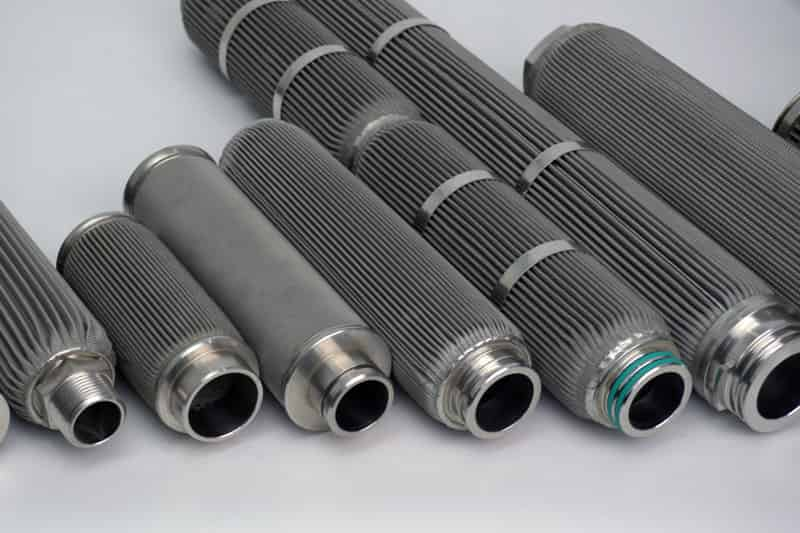
With the acceleration of industrialization and urbanization, the issues of water scarcity and water pollution are becoming increasingly severe, raising higher demands for water treatment technologies. Traditional filtration technologies, such as sand filtration and activated carbon filtration, have been widely used in water treatment but often fail to meet the demands for modern industrial and domestic water use due to limited treatment efficiency and water quality. Membrane filtration technology, as a highly efficient and precise separation method, is gradually becoming a research hotspot in the field of water treatment due to its outstanding purification effect and broad application prospects. This paper explores the integration of traditional filtration and membrane filtration technologies to provide new ideas for the development of water treatment technologies.
Overview of Traditional Filtration Technologies Traditional filtration technologies primarily utilize the sieving, adsorption, and interception actions of filtration media to remove suspended solids, particulate matter, and some dissolved substances from water. Common traditional filtration techniques include sand filtration, activated carbon filtration, and grating filtration.
Sand Filtration: Utilizes the sieving action of sand particles to remove suspended solids and particulate matter from water.
Activated Carbon Filtration: Uses the adsorption properties of activated carbon to remove organic substances, residual chlorine, and some heavy metals from water.
Grating Filtration: Removes large suspended solids and floating debris from water through the interception action of gratings.
Traditional filtration technologies are simple to operate and cost-effective, but their treatment efficiency and water quality are limited, making it difficult to meet high standards of water use. Overview of Membrane Filtration Technologies Membrane filtration technology uses the selective permeability of semipermeable membranes to separate and purify different components in water. According to the membrane pore size and the substances it can retain, membrane filtration can be classified into microfiltration, ultrafiltration, nanofiltration, and reverse osmosis.
Microfiltration: Pore size between 0.025 to 10 關m, mainly used to remove suspended solids, particulate matter, and bacteria from water.
Ultrafiltration: Pore size around 0.01 關m, capable of removing bacteria, viruses, and some high molecular organic substances from water.
Nanofiltration: Pore size between 0.1 to 1 nm, capable of removing dissolved organic substances, heavy metal ions, and hardness components from water.
Reverse Osmosis: Pore size around 0.0001 關m, capable of removing almost all suspended solids, bacteria, viruses, dissolved organic substances, inorganic salts, and heavy metals.
Membrane filtration technologies offer high efficiency, precision, and good water quality, but they are expensive and can be affected by membrane fouling and blockage. Integration of Traditional Filtration and Membrane Filtration Technologies To overcome the limitations of traditional and membrane filtration technologies, researchers have begun to explore the integration of these two technologies to improve water treatment efficiency and water quality. Advantages of Integrated Technology
Increased Treatment Efficiency: Traditional filtration, as a pre-treatment step, can remove most suspended solids and particulate matter from water, reducing the burden on membrane filtration and prolonging the membrane's service life.
Improved Water Quality: Membrane filtration, as a deep treatment step, can further remove dissolved substances and microorganisms from water, improving water quality.
Cost Reduction: By optimizing the integrated process, the use and replacement frequency of membranes can be reduced, lowering treatment costs.
Types of Integrated Technologies
Sand Filtration - Ultrafiltration Integrated Technology: Sand filtration removes suspended solids and particulate matter as a pre-treatment step, while ultrafiltration further removes bacteria, viruses, and high molecular organic substances as a deep treatment step. This integrated technology is widely used in water treatment plants and household water purifiers.
Activated Carbon - Reverse Osmosis Integrated Technology: Activated carbon removes organic substances, residual chlorine, and some heavy metals as a pre-treatment step, while reverse osmosis removes almost all dissolved substances and microorganisms as a deep treatment step. This integrated technology is widely used in seawater desalination, industrial water, and drinking water treatment.
Grating - Microfiltration - Nanofiltration Integrated Technology: Grating removes large suspended solids and floating debris as a pre-treatment step, while microfiltration further removes suspended solids and particulate matter, and nanofiltration removes dissolved organic substances, heavy metal ions, and hardness components as a deep treatment step. This integrated technology is suitable for industrial wastewater treatment and water reuse where water quality requirements are high.
Challenges and Prospects of Integrated Technology Although the integration of traditional filtration and membrane filtration technologies shows great potential in water treatment, there are still some challenges, such as membrane fouling and blockage, optimization of integrated process design, and reduction of operational costs. In the future, researchers will continue to explore new membrane materials, optimize integrated processes, and improve the anti-fouling performance of membranes, aiming to achieve more efficient, economical, and environmentally friendly water treatment technologies. Conclusion The integration of traditional filtration and membrane filtration technologies combines the low cost of traditional filtration with the high efficiency and precision of membrane filtration, offering new ideas for the development of water treatment technologies. By optimizing the integrated process and improving the anti-fouling performance of membranes, more efficient, economical, and environmentally friendly water treatment technologies are expected to be achieved, contributing to water resource protection and sustainable development.